ADR – Dangerous Goods


ADR – Dangerous Goods
ADR stands for “European Agreement of Transport of Dangerous Goods by Road” — an international standard that regulates the transportation of dangerous materials on roads in European countries.
This standard was adopted in 1957 in Geneva and was initially signed by nine countries. Poland ratified it in 1975. As of 2014, it was in effect in 48 countries.
Dangerous Goods – ADR
ADR are various substances that, due to their characteristics, can pose a threat to human health or negatively impact the environment.
Dangerous goods are classified according to ADR classes, which include information about their hazards, packaging conditions, labeling, technical inspection requirements, handling conditions, and restrictions on the joint packaging of goods.
ADR Classes
There are a total of nine ADR classes:
- ADR-1: Explosives — materials that can explode under certain conditions.
- ADR-2: Gases: flammable, non-flammable, and toxic.
- ADR-3: Flammable liquids — substances that can easily ignite.
- ADR-4: Flammable solids — substances that are prone to spontaneous ignition or release flammable gases when wet.
- ADR-5: Oxidizing substances and organic peroxides that can cause or enhance fire.
- ADR-6: Toxic and infectious substances that pose a health risk.
- ADR-7: Radioactive substances.
- ADR-8: Corrosive substances that can cause damage to other materials upon contact.
- ADR-9: Various dangerous materials not covered by other categories but pose risks during transportation.
Marking and Signs of Dangerous Goods
Transport vehicles carrying dangerous goods and the goods themselves must bear specific markings. Danger signs (100 x 100 mm) are applied to packages containing hazardous substances and items. Large danger signs (250 x 250 mm) are placed on the sides and rear of the transport vehicle when carrying packed dangerous goods or transporting them in tankers.
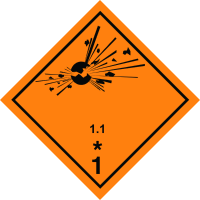
ADR-1
- 1.1 Explosive materials with mass explosion hazard
- 1.2 Explosive materials that do not have mass explosion hazard
- 1.3 Explosive materials that are flammable but do not explode
- 1.4 Explosive materials that do not present a significant hazard
- 1.5 Very insensitive explosive materials
- 1.6 Articles with very low sensitivity
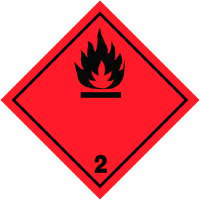
ADR-2
- 2.1 Flammable (combustible) gases
- 2.2 Non-flammable non-toxic gases
- 2.3 Toxic gases
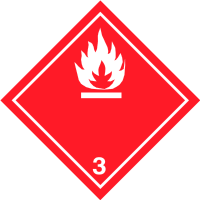
ADR-3
Class 3 includes substances and articles containing materials of this class that are:
- Liquids;
- Have a vapor pressure not exceeding 300 kPa at 50 °C and are not entirely gaseous at 20 °C and normal pressure (101.3 kPa);
- Have a flashpoint not exceeding 60 °C.
Class 3 also includes:
- Liquid deactivated explosive substances.
- Diesel fuel, light heating oil, and gas oil with a flashpoint above 60 °C but not exceeding 100 °C;
- Liquid and solid substances in a molten state with a flashpoint above 60 °C, transported hot at or above their flashpoint.
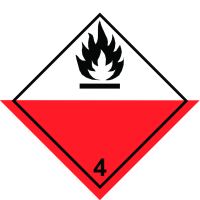
ADR-4
- 4.1 Flammable solids
- 4.2 Self-heating substances
- 4.3 Substances that emit flammable gases upon contact with water
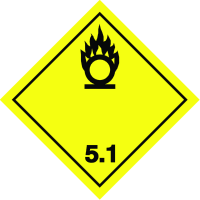
ADR-5
5.1 Oxidizing substances
5.2 Organic peroxides
Class 5.1 includes substances that are not necessarily flammable by themselves but can cause or support the combustion of other materials by releasing oxygen, as well as products containing such substances.
The main property of dangerous goods in this class is their ability to decompose upon heating, releasing oxygen that can promote fires in emergencies. Additionally, oxidizing substances can form mixtures with flammable materials that may ignite upon formation or catch fire in the presence of an ignition source. Contact between goods of this class and flammable substances should be avoided.
Class 5.2 includes organic peroxides and compositions of organic peroxides. Organic peroxides are organic compounds containing a bivalent structure –O–O– and can be considered derivatives of hydrogen peroxide if one or both hydrogen atoms are replaced by organic radicals.
Organic peroxides are prone to exothermic decomposition at normal or elevated temperatures, which may be initiated by heat, contact with impurities (e.g., acids, heavy metal compounds, amines), friction, or impact. The rate of decomposition increases with temperature and depends on the specific composition of the organic peroxide.
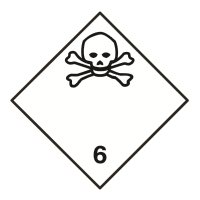
ADR-6
6.1 Toxic substances
6.2 Infectious substances
Class 6.1 includes substances (including mixtures and solutions) that can cause death or serious injury or harm human health through inhalation, skin absorption, or ingestion.
Class 6.2 includes substances known or suspected to contain pathogenic organisms that cause diseases in humans or animals, such as bacteria, viruses, rickettsia, parasites, fungi, and other infectious agents.
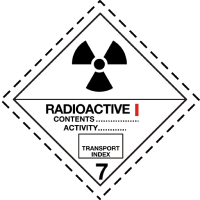
ADR-7
Class 7: Radioactive materials
A radioactive material is any material containing radionuclides, where the concentration of activity and the total activity of the cargo exceed values established by nuclear and radiation safety norms and regulations.
The main hazards:
- Radioactive radiation in the form of alpha, beta, gamma, or neutron radiation;
- Significant heat release when transporting radioactive materials with high activity;
- The danger of uncontrolled chain reactions and nuclear explosions during the transport of fissile radioactive materials.
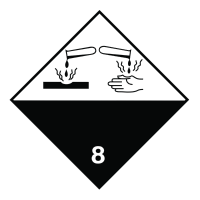
ADR-8
Class 8 includes substances and articles that can cause severe injuries upon contact with skin and mucous membranes or can damage or destroy other goods or vehicles in case of leakage or spillage. This class also includes substances that form corrosive liquids, vapors, or suspensions when in contact with water or moisture in the air.
Some goods in this class are flammable substances capable of producing toxic products during combustion, exhibit oxidizing properties, and can ignite flammable substances, as well as being toxic.

ADR-9
Class 9 includes substances and articles that pose a danger during transportation not covered by other classes.
An additional label 9A with a battery symbol denotes the transportation of damaged rechargeable batteries.
Requirements for the Crew Transporting ADR
To drive a truck carrying dangerous goods, drivers must have at least three years of driving experience, hold a valid driver’s license of the appropriate category, possess an ADR certificate for training drivers of vehicles transporting dangerous goods, and have undergone instruction and medical examination.
Passengers are prohibited from being transported in vehicles carrying dangerous goods.
Every crew member of the vehicle must be trained in the use of fire-fighting equipment and first-aid measures.
Crew members are prohibited from:
- Opening packages containing dangerous substances or products;
- Entering the vehicle with lighting devices that have an open flame, as well as open metal surfaces that can create sparks;
- Using any lighting devices in vehicles transporting liquids with a flashpoint not exceeding 60 °C, flammable substances or products of Class 2, except for portable lamps designed to prevent ignition of flammable vapors and gases that may have entered the vehicle;
- Using fire or open flames near vehicles transporting Class 1 substances and products;
- Using fuel heating devices installed in FL-type vehicles during loading and unloading operations, as well as in loading areas;
- Smoking near vehicles and inside them during loading and unloading operations.
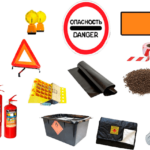
ADR Set – what a driver must have when transporting dangerous goods.
No coordinates.